How to Calculate Your Off-Grid Power Needs
As an Amazon Associate I earn from qualifying purchases.
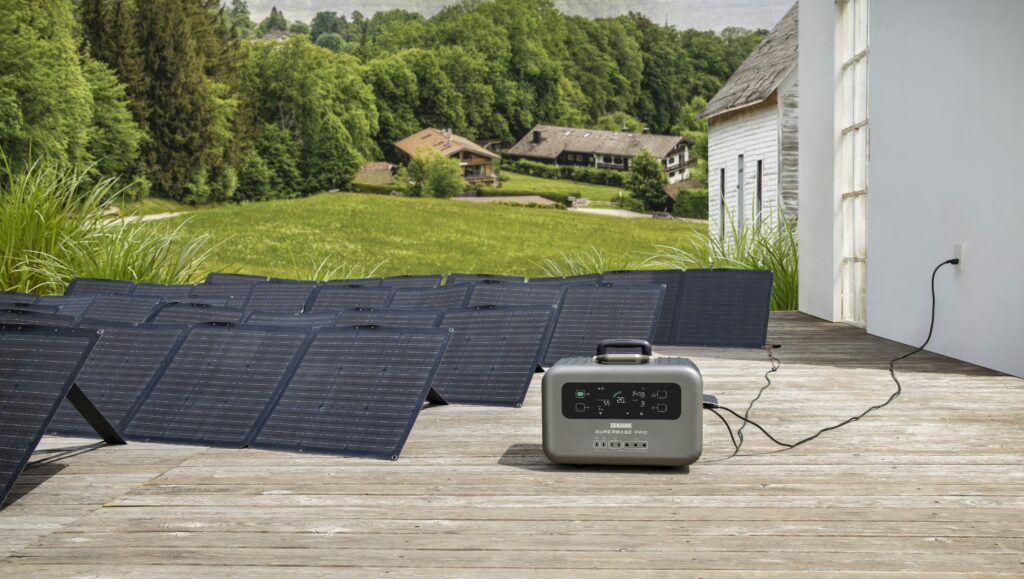
Determining your power requirements is the most critical step in transitioning to an off-grid lifestyle. Without a clear understanding of your daily consumption, you risk either overspending on unnecessary hardware or—worse—finding yourself in the dark with a dead battery bank.
Step 1: The Energy Audit
Before buying a single solar panel, you must list every device you plan to run. This includes everything from laptops and LED lights to high-draw appliances like water pumps or fans.
To find the daily Watt-hours ($Wh$) for each device, use this simple formula:
$$\text{Watts} \times \text{Hours of Use per Day} = Wh \text{ per day}$$
Pro Tip: Look for the label on the back of your electronics. If it only lists Amps ($A$) and Volts ($V$), calculate the Watts ($W$) by multiplying them: $W = V \times A$.
Step 2: Account for Inverter Inefficiency
Most off-grid systems use an inverter to convert DC power from batteries into the AC power used by standard household plugs. No inverter is 100% efficient; most lose about 10% to 15% of energy during the conversion.
To be safe, multiply your total daily $Wh$ by 1.15 to ensure your battery bank can handle the overhead.
Step 3: Sizing Your Battery Bank
For longevity, you should never drain your batteries to zero.
- Lithium (LiFePO4): Can be discharged up to 80-90%.
- Lead Acid/AGM: Should only be discharged to 50%.
If your daily need is $2,000Wh$ and you use Lithium batteries, you’ll want at least a $2,500Wh$ (roughly 200Ah at 12V) capacity to avoid deep-cycling them too hard.
Recommended Gear for Precision Tracking
1. P3 P4400 Kill A Watt Electricity Monitor
Before you build your system, you need to know exactly what your current “on-grid” devices pull. Plug your laptop or coffee maker into this monitor for a day to get a real-world reading of your consumption. It removes the guesswork from your energy audit.

2. Victron Energy SmartShunt
Once your system is built, a “battery fuel gauge” is essential. The SmartShunt connects to your battery bank and sends precise data (State of Charge, time remaining, and current draw) directly to your smartphone via Bluetooth.

3. Renogy 200W Monocrystalline Solar Kit
If your calculations show a modest power need (charging laptops, phones, and lights), this starter kit is an industry standard. It includes the panels and a charge controller to safely feed power into your battery bank.

Summary Calculation Table
| Device | Watts | Hours/Day | Total Wh |
| Laptop | 60W | 5 | 300Wh |
| LED Lights | 10W | 6 | 60Wh |
| Small Fan | 30W | 8 | 240Wh |
| Total Daily Need | 600Wh |
By mastering these numbers, you ensure your off-grid setup is both reliable and cost-effective.
How many days of backup power (autonomy) are you planning to have for those cloudy stretches? Let us know in the comments below!
LEAVE A COMMENT