The Best Off-Road Vehicles for Remote Living
As an Amazon Associate I earn from qualifying purchases.
Finding the right vehicle for off-grid living is less about speed and more about three critical pillars: reliability, payload capacity, and ease of repair. When you are miles from the nearest mechanic, a vehicle you can fix with a basic toolset is often more valuable than one with the latest high-tech sensors.
Here is a breakdown of the best off-road vehicles for remote living and the essential gear to keep them running.
1. The “Million-Mile” King: Toyota Land Cruiser (70 Series or 100 Series)
The Land Cruiser is the gold standard for global expeditions for a reason. They are overbuilt, utilizing heavy-duty components that handle corrugated dirt roads for decades.
- Why it’s perfect: The 100 Series offers a balance of comfort and ruggedness, while the older 70 Series (if you can find one) is a mechanical beast that rarely fails.
- Off-Grid Utility: High resale value and a massive aftermarket for snorkeling kits and auxiliary fuel tanks.
2. The Workhorse: 1st or 2nd Gen Toyota Tacoma
If you are hauling building materials, firewood, or water tanks to your homesite, a mid-sized truck is essential. The early Tacomas are narrow enough to fit on tight mountain trails where full-sized trucks might get stuck.
- Why it’s perfect: The 22RE or 3.4L V6 engines are legendary for their longevity.
- Off-Grid Utility: The truck bed allows for a “slide-in” camper or a rack system for solar panels.
3. The Mechanical Legend: Jeep Wrangler (TJ or JK)
The Jeep’s solid front axle provides superior “articulation,” meaning it can keep its tires on the ground over very uneven rocks and ruts.
- Why it’s perfect: You can find parts for a Jeep in almost any town in America. They are essentially Legos for adults—everything is modular and replaceable.
- Off-Grid Utility: Best-in-class maneuverability for properties with difficult, steep, or rocky access roads.
Essential Gear for Off-Grid Transit
No matter which vehicle you choose, “self-recovery” is the most important skill for remote living. You cannot always rely on a neighbor to pull you out.
1. Portable Power & Jump Starting
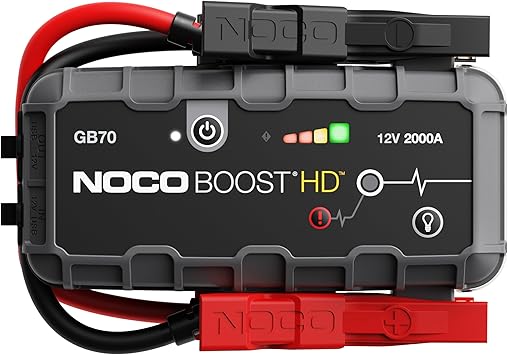
Standard jumper cables are useless if there isn’t another car around. A lithium-ion jump starter is a mandatory glovebox item.
- Product Suggestion: NOCO Boost HD GB70 2000 Amp 12-Volt UltraSafe Lithium Jump Starter — It can jump-start large engines multiple times on a single charge and power USB devices in an emergency.
2. Traction Recovery Boards
If you get bogged down in mud, snow, or sand, these boards provide the friction your tires need to climb out without needing a winch.
- Product Suggestion: MAXTRAX MKII Signature Orange Recovery Boards — These are the industry standard for durability; they won’t snap under the weight of a loaded 4×4.

3. Tire Pressure Management
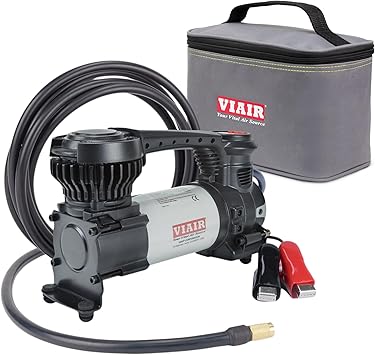
Lowering your tire pressure (“airing down”) increases your footprint and traction on soft ground. However, you need a way to pump them back up before hitting the pavement.
- Product Suggestion: Viair 88P Portable Air Compressor — A reliable, heavy-duty portable compressor that clips directly to your battery.
4. Emergency Communication
Cell service is often non-existent in the best off-grid locations. A satellite communicator ensures you can call for help regardless of tower proximity.
- Product Suggestion: Garmin inReach Mini 2 — A compact device for two-way messaging and SOS alerts via the Iridium satellite network.

Final Thoughts for Off-Grid Mastery
When choosing your vehicle, prioritize commonality. If you drive a rare European luxury SUV, you’ll be waiting weeks for parts to arrive at your rural PO Box. Stick to Toyota, Jeep, or Ford platforms where parts are stocked at every local hardware and auto store.
Maintenance isn’t just a chore off-grid—it’s your lifeline.
LEAVE A COMMENT